
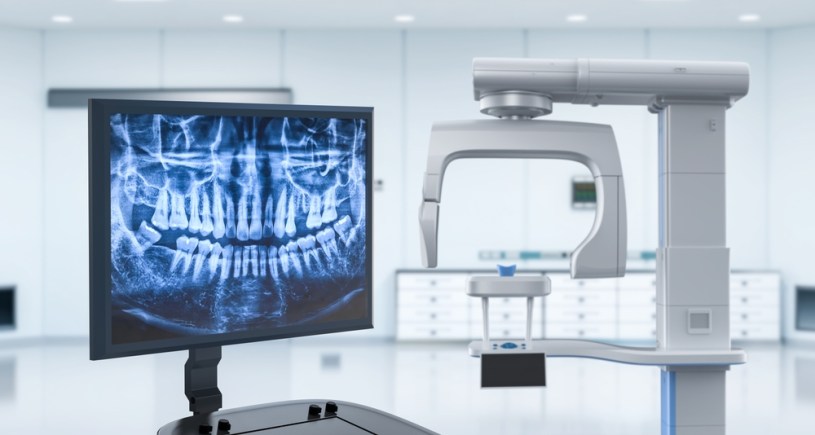
Advancements in dental technology continue to improve the way oral health conditions are diagnosed and treated. One of the most significant innovations in endodontics is Cone Beam Computed Tomography (CBCT), a specialized three-dimensional imaging technology that provides clinicians with a detailed view of teeth, surrounding bone, and the root canal system. By offering information that may not be visible on traditional dental X-rays, CBCT has become an important tool for accurate diagnosis and treatment planning.
Endodontics focuses on preserving natural teeth by treating conditions that affect the dental pulp and root canal system. Because the internal anatomy of every tooth is unique, obtaining detailed diagnostic information before treatment begins is essential. A conventional two-dimensional X-ray provides valuable information, but it can sometimes hide important anatomical structures due to overlapping images. CBCT overcomes this limitation by creating a three-dimensional digital reconstruction that allows clinicians to examine the tooth from multiple angles.
Every tooth contains a complex network of canals, curves, and microscopic spaces. While many teeth follow common anatomical patterns, others contain hidden canals or unusual root shapes that can influence treatment planning. Identifying these variations before treatment helps endodontists develop a more comprehensive approach while preserving healthy tooth structure whenever possible.
Another important benefit of CBCT is its ability to assist in diagnosing dental infections. Infections often begin inside the pulp before spreading into the surrounding bone. Three-dimensional imaging allows clinicians to determine the location and extent of these changes more accurately, providing valuable information that supports individualized treatment planning.
CBCT also plays an important role in evaluating cracked teeth. Diagnosing cracks can be challenging because symptoms often vary from one patient to another. Some people experience pain only while chewing, while others notice sensitivity to temperature changes. Although not every crack is directly visible on a CBCT scan, surrounding bone changes and other diagnostic findings can provide important clues that help clinicians determine the cause of a patient’s symptoms.
For patients requiring root canal retreatment, advanced imaging can provide insight into factors that may have contributed to persistent symptoms. Previously untreated canals, complex anatomy, root fractures, or ongoing infection can often be evaluated more effectively with three-dimensional imaging than with traditional radiographs alone.
Another advantage of CBCT technology is its ability to improve communication between clinicians and patients. Rather than relying solely on verbal explanations, endodontists can review three-dimensional images with patients, helping them better understand their diagnosis and recommended treatment. Visualizing the affected tooth often makes complex dental conditions easier to understand and allows patients to make informed decisions about their care.
It is important to understand that CBCT does not replace conventional dental X-rays. Instead, the two technologies complement one another. Routine examinations often rely on traditional digital radiographs, while CBCT is recommended when additional detail can improve diagnosis or treatment planning. Choosing the appropriate imaging method depends on the specific clinical situation and should always be based on professional judgment.
As dental technology continues to evolve, three-dimensional imaging has become one of the most valuable tools available in modern endodontics. Accurate diagnosis remains the foundation of successful treatment, and CBCT provides clinicians with the detailed information needed to evaluate complex anatomy, identify hidden conditions, and develop precise treatment plans. By supporting better clinical decision-making, this advanced technology contributes to the long-term goal shared by both patients and endodontists: preserving natural teeth whenever possible.

